
Cape Town metro · Standard working hoursinfo@katawaprojects.co.za
Katawa Projects
KATAWA PROJECTS / CAPE TOWN

Solar Planning for Sectional-Title Properties Cape Town

Assess rooftop access, common-property permission and electrical metering before proposing PV or battery upgrades for a Cape Town townhouse or apartment.

✓ Cape Town metro coverage✓ Planned site assessments✓ Visits by arrangement
Solar power system equipment
Solar & Backup Power in Cape Town
Request a service visit

Request solar planning for sectional-title properties

Include the property suburb, the issue or planned work and the best way to reach you.

By submitting, you agree to be contacted regarding this enquiry. No payment is collected.
Solar & Backup Power / Cape Town

What the work involves and how we assess it

01

Understand who owns the roof and wiring

In many sectional-title schemes, roofs and shared electrical infrastructure form part of common property. A unit owner may not have authority to mount equipment or run cable across shared areas simply because a roof is physically above the unit. We ask for the body corporate or managing agent contact, relevant conduct rules and initial permission requirements before proposing detailed installation work. Ownership and exclusive-use arrangements vary across properties.

02

Identify individual versus common electrical loads

Powering one flat is different from supporting communal gates, stairwell lighting, security equipment or central pumps. A common-property installation may have separate budgeting, billing and operational responsibilities from an individual owner’s inverter. We discuss metering, supply ownership and who can approve isolation of shared circuits. The system design must be based on the actual load arrangement rather than assuming each unit has a simple standalone residential supply.

03

Roof structure, access and maintenance rights

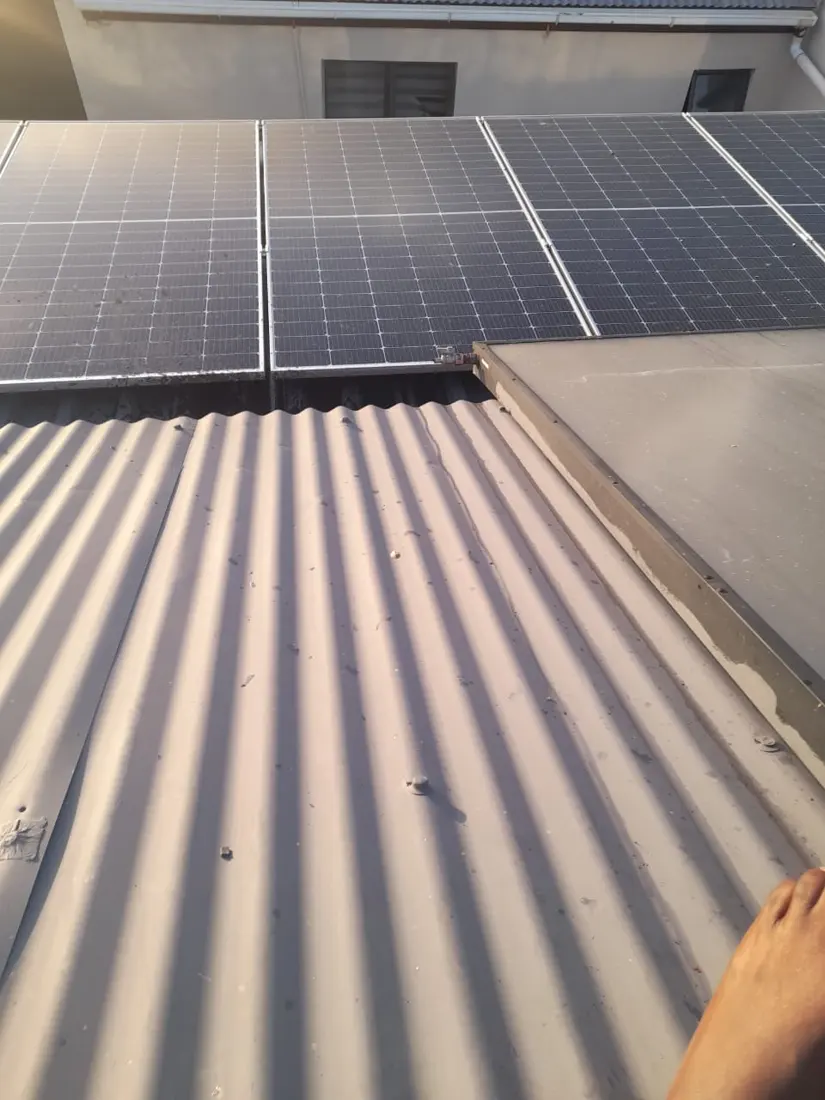
A shared pitched roof, restricted service duct or apartment-level balcony brings access and waterproofing risks that do not arise in a detached house. Mounting and cable routes need appropriate structural and electrical consideration. Future cleaning, inverter replacement and roof repairs also need access permissions. We do not suggest drilling or connecting equipment before the authorised body corporate and relevant professionals have agreed on the work.

04

Municipal and scheme approvals are separate

Even after trustees or members approve an installation, applicable SSEG authorisation and qualified electrical sign-off remain separate requirements. Conversely, municipal technical approval does not automatically waive the scheme’s property-consent rules. A useful project plan names the owner, approved system scope, cable routes, signatories, responsible equipment operator and future maintenance contact. We discuss those dependencies before offering a definite programme.

Situations to discuss

Common job conditions that change the approach

Describe what you have observed before requesting work. These examples are not substitutes for an on-site diagnosis.

Owner wants panels on a shared roof

Obtain scheme consent and clarify roof rights before treating the area as available.

Complex needs backup for security gates

Analyse common-area metering and essential loads separately from private flat supplies.

Three owners want one shared battery

Define ownership, distribution, billing and maintenance responsibility before design.

Preparing the request

What to have ready before arranging an assessment

In a sectional-title scheme, request the managing agent’s contact, available conduct rules and a description of whether the proposed equipment serves one unit or common facilities. The difference matters for rooftop access, insurance, cable routes and metering. A technically feasible panel layout can still be inappropriate if the responsible owners have not approved use of common property.

Planning for an apartment building should also identify who can isolate circuits for testing, who pays for maintenance and how equipment will be accessed after installation. The owner should seek scheme consent before committing to structural or electrical work. The relevant distributor’s solar authorisation and professional sign-off requirements apply independently of internal scheme approvals.

Scope and quotation

What influences the cost and practical work?

The City of Cape Town authorisation guidance applies to relevant new and modified PV and battery systems in its supply area. City-approved inverter arrangements, professional sign-off and authorisation must be addressed before switching on. Other distributors may impose their own rules.

Frequently asked questions

Solar Planning for Sectional-Title Properties: questions

Can I fit solar to my townhouse without approval?

Not necessarily. Roof and shared-property rights and relevant municipal requirements must be checked.

Does a body-corporate letter replace City authorisation?

No. Property permission and electrical regulatory approval serve different purposes.

Can communal and private circuits share one system?

Possibly with proper design, agreements and metering; never assume it is straightforward.

☎WhatsApp