Backup is not the same as rooftop generation
A battery and inverter may supply selected loads without solar panels, while a rooftop PV system requires its own design, protective equipment and permission considerations.

Considering rooftop solar, an inverter or a battery upgrade? We discuss the property’s electricity use, essential loads, roof conditions and existing electrical installation before determining a practical system scope.
Include your suburb, whether you already have an inverter or panels, your main backup priorities and any recent electricity-use information. Photos of the equipment labels can help.
A solar installation and a backup-power installation solve different problems. Panels generate electricity when conditions allow; batteries store energy; an inverter manages conversion and distribution. Effective designs consider expected consumption, essential circuits and future expansion.
We begin with your goal: reducing purchased electricity, maintaining selected loads during outages or combining both. Load information, roof layout, shading, equipment location and existing distribution arrangements inform the next step and the quotation.
System performance varies with consumption patterns, roof orientation, weather and equipment. Any grid connection and approvals must follow the municipality’s applicable process and technical requirements. We will not publish unsupported savings or payback guarantees.
Solar generation and backup electricity solve related but different problems. Solar panels generate power when conditions permit; an inverter and battery arrangement can support selected circuits when the grid is unavailable. A sensible proposal starts by identifying appliances, their running and starting loads, when power is used and how long backup is required.
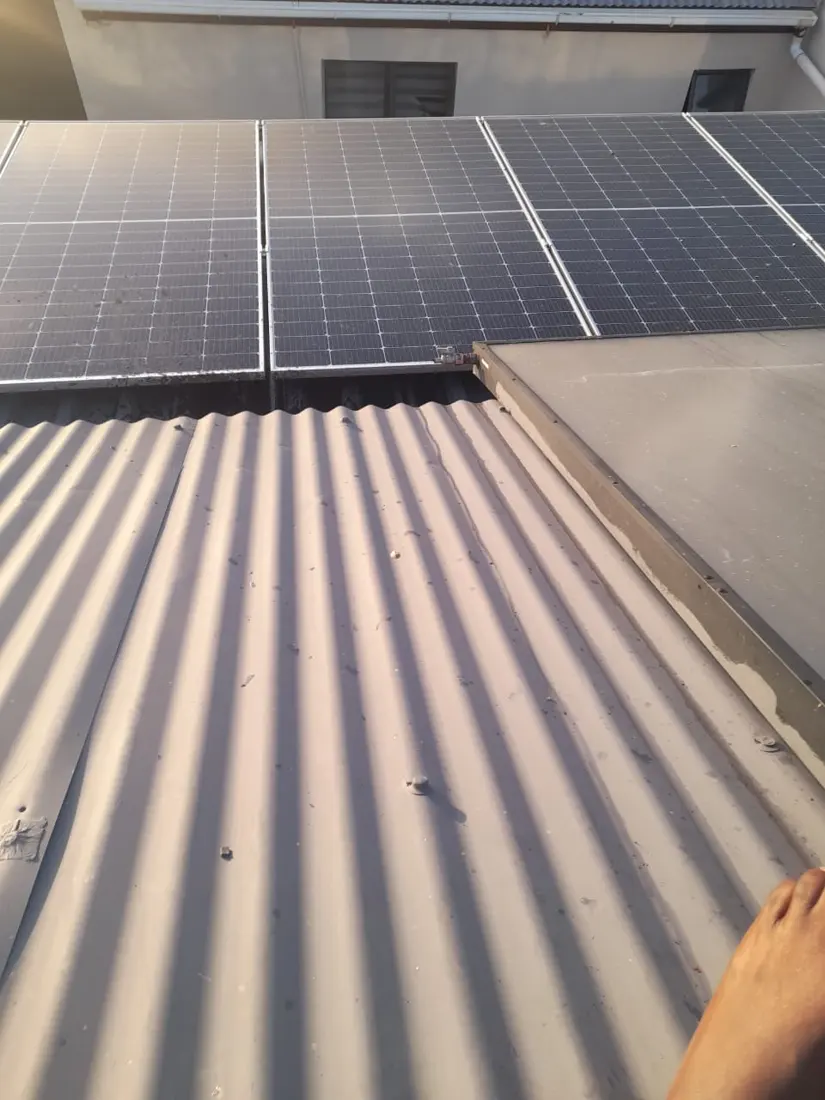
Roof condition, orientation, shading, cable routes, protection, inverter location and ventilation all affect installation planning. Panels alone do not guarantee uninterrupted power during an outage. System architecture, changeover arrangements and any municipal or utility requirements must be addressed before equipment is ordered.
Where an existing installation is being expanded, component compatibility and available capacity must be assessed rather than assumed. Customers should provide existing inverter and battery model details when available. We can then establish whether a repair, expansion or redesigned system is the appropriate next step.
A battery and inverter may supply selected loads without solar panels, while a rooftop PV system requires its own design, protective equipment and permission considerations.
Panels need suitable roof structure, fixing methods and exposure. A proposed panel count without a site assessment is only a preliminary indication.
Inverter capacity, battery compatibility, essential circuits, protection, grid interaction and commissioning documentation must be considered together.
The City of Cape Town requires applicable embedded-generation authorisation. A new system must not be treated as approved merely because panels or batteries have been installed.
Further reading: City of Cape Town embedded-generation authorisation ↗
Based near Fish Hoek and Masiphumelele, we handle enquiries from the Southern Peninsula, Southern Suburbs, City Bowl, Atlantic Seaboard, Northern Suburbs and other parts of the metro. Appointments depend on service type, travel and site availability.
Not necessarily. Backup capability depends on system configuration, inverter and battery provision.
Assessment is needed to establish equipment compatibility and safe electrical integration.
Applicable municipal rules and registration requirements must be checked for the proposed installation.
Clear explanations for the decisions that commonly arise before booking the work.
Plan the work, understand the paperwork and discuss the right services before starting a project.
Explore all property guides →