
Cape Town metro · Standard working hoursinfo@katawaprojects.co.za
Katawa Projects
KATAWA PROJECTS / CAPE TOWN

Electrical Load Assessments & Circuit Planning Cape Town

Plan electrical demand before adding heat pumps, workshops, EV chargers or other heavy loads to an existing Cape Town property.

✓ Cape Town metro coverage✓ Registered trade capacity✓ Visits by arrangement
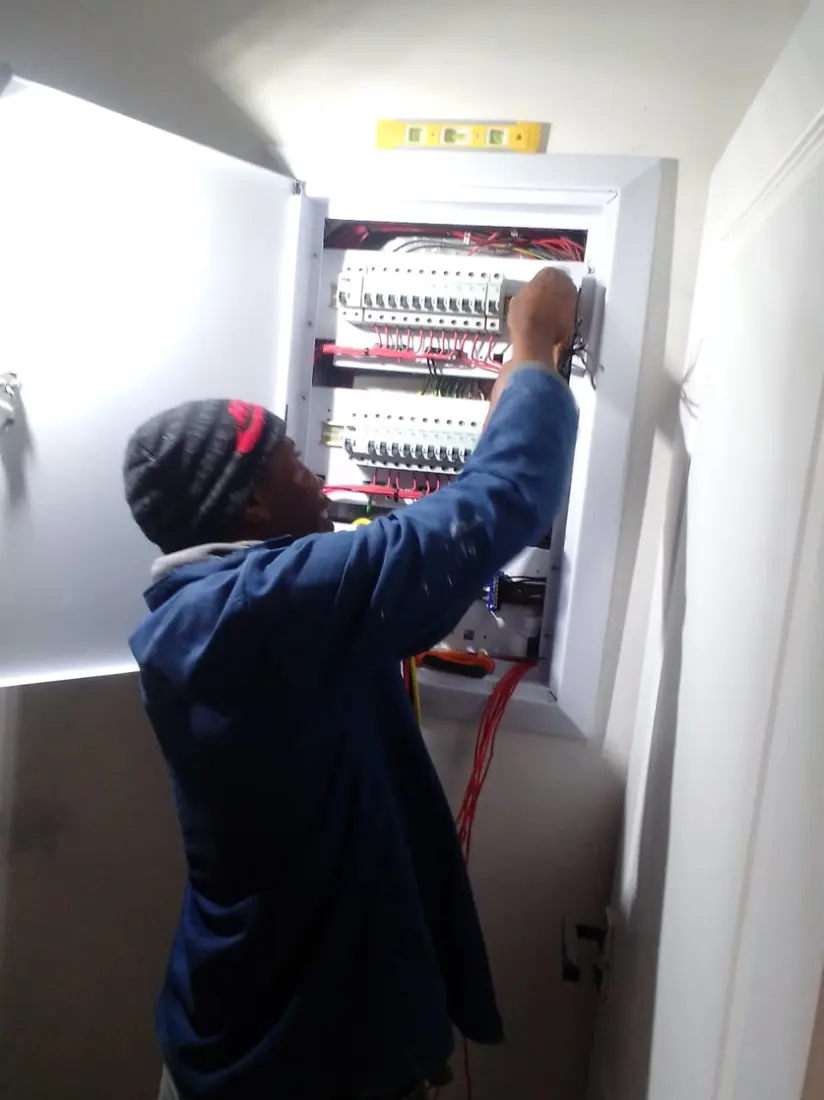
Electrical equipment and distribution wiring
Electrical in Cape Town
Request a service visit

Request electrical load assessments & circuit planning

Include the property suburb, the issue or planned work and the best way to reach you.

By submitting, you agree to be contacted regarding this enquiry. No payment is collected.
Electrical / Cape Town

What the work involves and how we assess it

01

Know the incoming supply limit

A new appliance may require much more than a convenient vacant breaker position. The utility supply rating, existing circuit schedule, equipment nameplates and actual simultaneous use all affect loading. We begin with a list of current and proposed equipment, where it will be located and how often it operates. Upsizing protective devices without checking cable capacity is unsafe and does not increase the municipal supply.

02

Diversity, start-up current and future equipment

Not every appliance runs continuously or starts at the same time. Pumps, compressors and motors may draw higher starting current, while controlled loads such as geysers can sometimes be scheduled to limit coincidence. The design must reflect the real building pattern without assuming that future equipment will never be added. We discuss sensible circuit separation and any realistic allowance for planned expansion.

03

Circuit distribution and safe isolation

The load review can expose overloaded outlet groups, incompatible shared equipment or ageing boards that cannot accommodate a dedicated circuit. We distinguish changes to consumer-owned wiring from an application to the municipal or other supply authority. Three-phase supply may be relevant to certain plant, but it is not automatically the solution for a busy household. Protective coordination and suitable earth-leakage arrangements require qualified design and testing.

04

Deliver a scope rather than a guess

Provide main supply information if available, equipment model labels and pictures of closed distribution board fronts only. Tell us whether trips happen on hot days, when specific machinery starts or only during peak use. We explain what site assessment and testing may be necessary, then define likely cable, board, protection or supply-change work. A quotation cannot honestly promise extra capacity where the network provider has not agreed to it.

Situations to discuss

Common job conditions that change the approach

Describe what you have observed before requesting work. These examples are not substitutes for an on-site diagnosis.

Adding an induction hob and home EV charger

Review total load and likely coincidence before selecting dedicated circuits.

Small workshop compressor trips power

Examine start-up characteristics and protective settings; never fit a larger breaker by guesswork.

Owner requests municipal three-phase supply

Separate municipal application from private-side distribution work and testing.

Preparing the request

What to have ready before arranging an assessment

A useful demand review starts with the actual equipment schedule: rated power, likely simultaneous use, motor starts and what may be installed in future. For a workshop, list compressors, welders and larger tools individually. For a home, include new electric cooking equipment, a heat pump or EV charger alongside the normal household loads. This is more informative than guessing from the number of sockets in the building.

If the review finds insufficient capacity, the response may include revising circuit allocation, changing equipment controls or applying for a supply upgrade. These are very different cost and timing decisions. The electrician can design private-side work, but a municipal supply increase remains subject to the utility’s approval and network constraints.

The decision may also depend on the practical cost of changing the way a load operates. For example, scheduling a non-essential heat load at a different time can sometimes address a coincidence problem without increasing municipal capacity. Whether that is suitable must be checked against the equipment, users and protection requirements.

Scope and quotation

What influences the cost and practical work?

Frequently asked questions

Electrical Load Assessments & Circuit Planning: questions

Will more breakers give me more capacity?

No. Incoming supply and conductor capacity set limits beyond the number of breaker spaces.

Is this the same as fault finding?

Load planning addresses intended demand; fault finding isolates an unexpected malfunction.

Can you guarantee a City supply upgrade?

No. The electricity provider determines whether an upgrade can be approved.

☎WhatsApp